
Compassionate Conversation: Claire Adida discusses immigration in “Kindness to the Stranger”
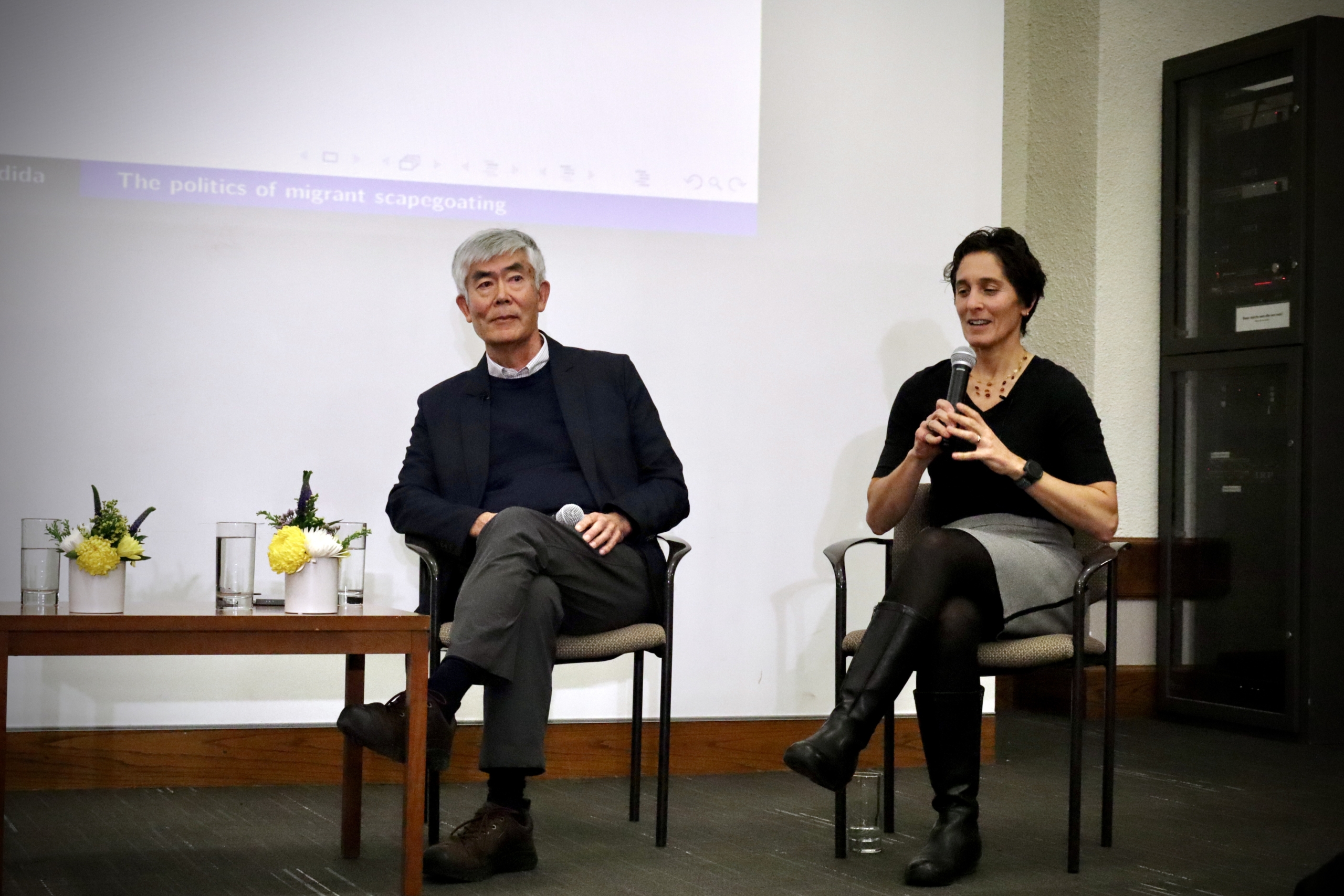
Claire Adida answers a question alongside her fellow panelist, Hiroshi Motomura. Photo by Hannah Park.
By Hannah Park
On Thursday, Jan. 29, the UCLA Bedari Kindness Institute (BKI) and Dialogue Across Difference (DaD) Initiative welcomed Claire Adida, senior fellow at the Freeman Spogli Institute for International Studies and faculty co-director of the Immigration Policy Lab at Stanford University, to speak in the latest installment of its “Compassionate Conversations” series. After sharing her research on the politics of migrant scapegoating, Adida engaged in a conversation with Hiroshi Motomura, Susan Westerberg Prager Professor of Law at UCLA; Abel Valenzuela Jr., dean of the UCLA Division of Social Sciences; and BKI director David Myers, followed by a Q&A with the audience.
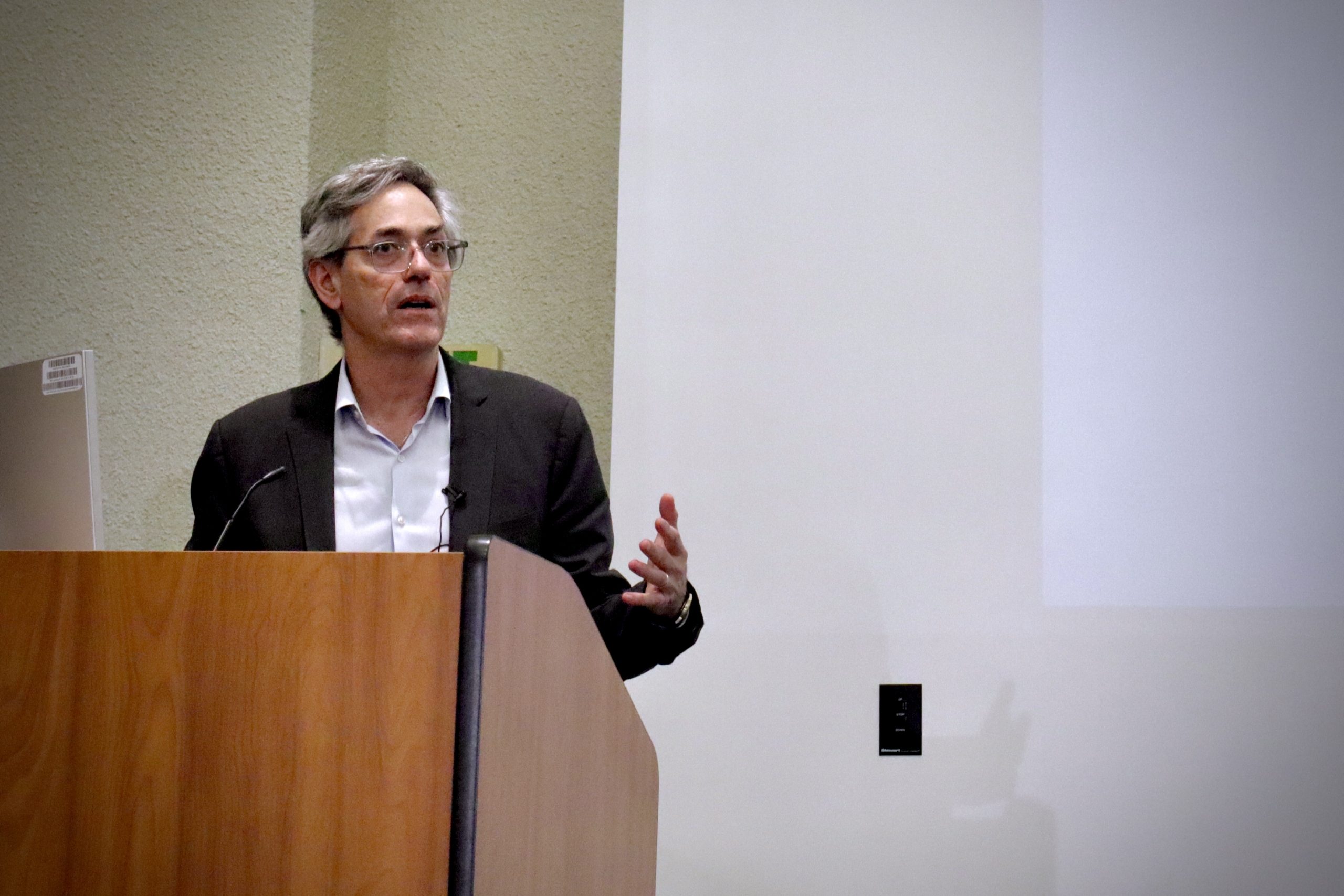
Myers gives a brief introduction and reinforces the year’s theme of kindness to the stranger. Photo by Hannah Park.
In the light of the current immigration crisis, Myers underscored the pressing need for “kindness to the stranger,” a concept present in the Hebrew Bible, the New Testament and other spiritual sources since antiquity. He welcomed Adida as a national expert in diversity in society—Adida conducted important comparative studies of immigrants in societies ranging from West Africa to France to the U.S.—to speak on the politics of migrant scapegoating.
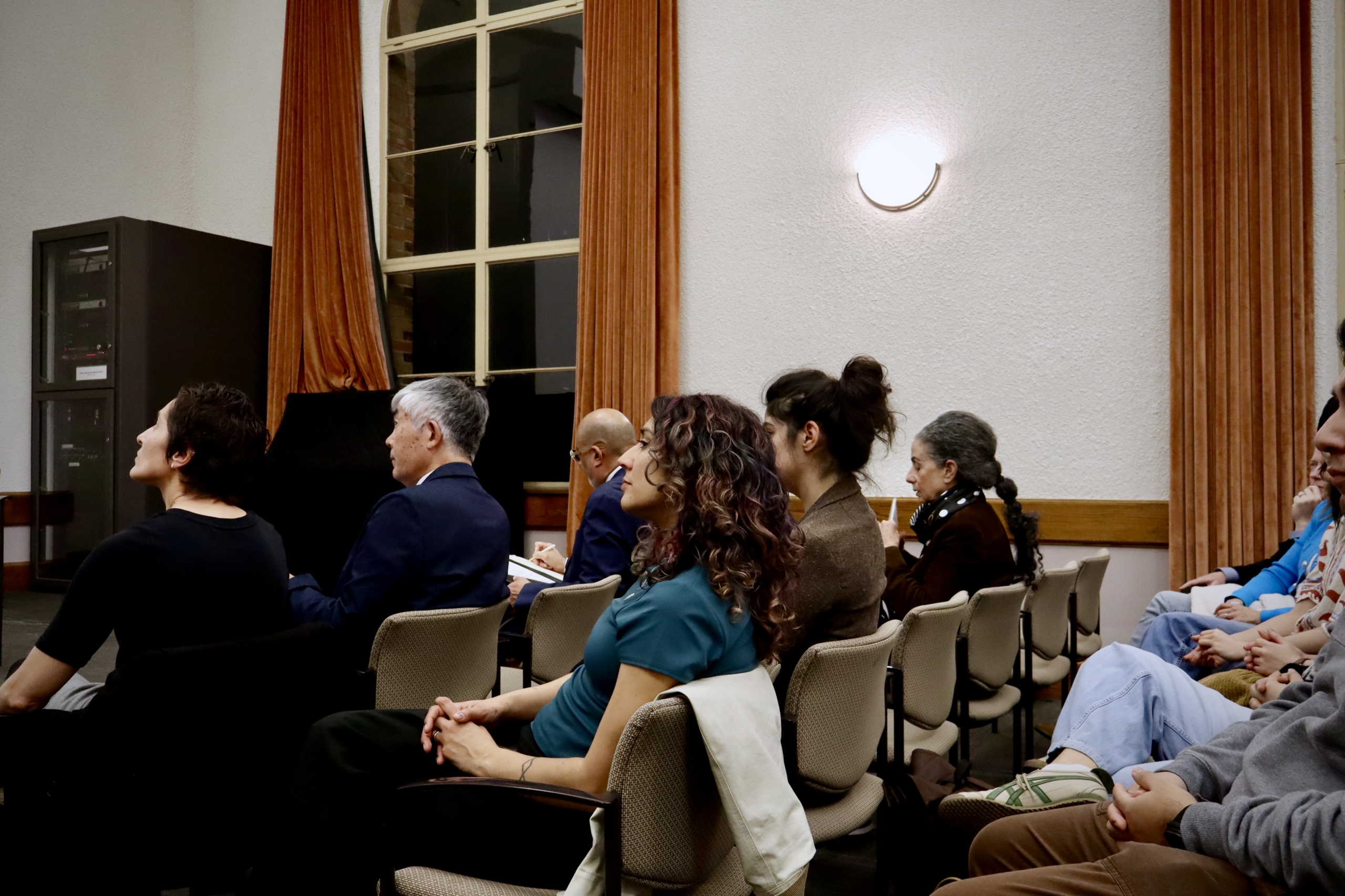
The panelists sit with the audience. Photo by Hannah Park.
Adida: “Politics of Migrant Scapegoating”
During her presentation, Adida sketched the key drivers of migrant exclusion and her research to increase migrant inclusion through messaging that includes both salient information and personal narratives.
“Migrant scapegoating is not a new phenomenon,” Adida said. “But what we’ve seen over the past few years, and I would say particularly the past few months, is what happens when the highest levels of government engage unabashedly in migrant scapegoating.”
Scapegoating refers to when someone is “blamed or punished for the sins of others” (Oxford English Dictionary, emphasis mine). As a striking example of scapegoating, Adida shared an image of an inflammatory tweet made by the Department of Homeland Security on Nov. 20, 2025, which blamed social ills as diverse as the affordability crisis, lack of jobs, women feeling unsafe in public spaces and even bad traffic on the “tens of millions of criminal illegals in our country.” She indicated that perceptions of migrants as economic, cultural, and physical threats were key drivers of exclusion.
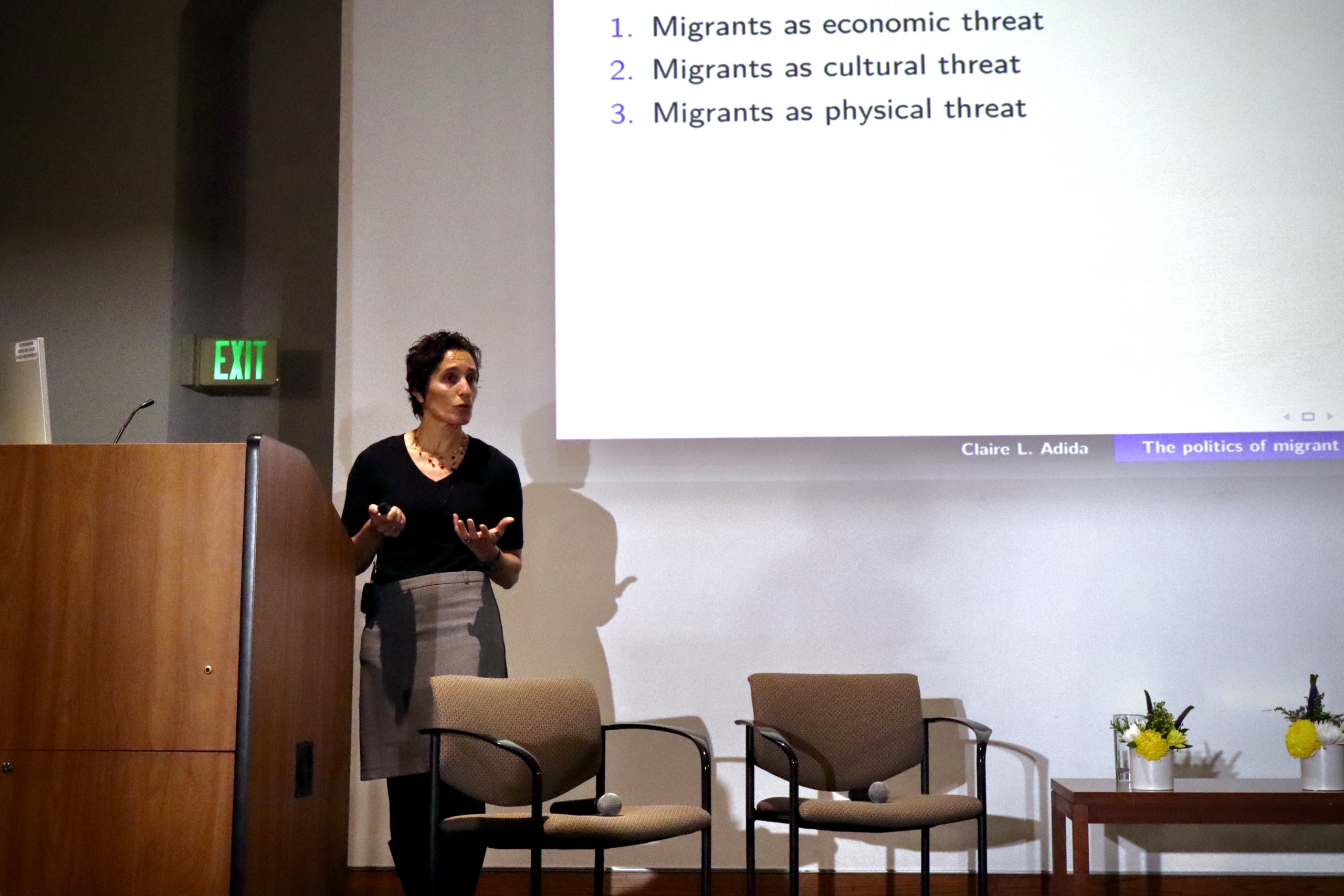
Adida describes the drivers of migrant exclusion. Photo by Hannah Park.
However, Adida wanted to “turn the tables” and foster inclusion instead. She conducted research to explore what types of messages would be most effective in doing so, sharing key takeaways from her paper: “When hearts meet minds: complementary effects of perspective-getting and information on refugee inclusion” (2025). Adida credited fellow researchers Adeline Lo, Melina Platas, Lauren Plather, and Scott Williamson.
To begin with, Adida used Aristotle’s familiar appeals to logic (Logos) and emotion (Pathos) to craft impactful narratives. Adida explained that in order to combat misconceptions about refugees logically, information must be new and salient (personality relevant). In terms of emotion, Adida sought to increase empathy through perspective-taking narratives—such as inviting readers to place themselves in the shoes of a Syrian refugee. In response to skeptics who doubted the efficacy of these stories due to empathy bias (the idea that people tend to empathize less with people who are different from them because empathy requires cognitive and emotional effort), Adida sought to design a hard test for empathy toward a “distant other.”
“Can we empathize with folks who are very different from us? Can we push that to the limit?” Adida asked.
Over the course of three studies, Adida 1) identified a common misconception that predicted anti-refugee, exclusionary sentiments: the extent of security vetting that refugees undergo, 2) designed a difficult empathy intervention: a narrative about Abdi, a Muslim refugee from Somalia living in Minneapolis, and 3) tested this empathy intervention’s effects on participants’ warmth toward refugees, their policy preferences concerning annual refugee caps, and their willingness to write a letter to the president about this policy (attitudinal and behavioral changes). In the third study, Adida imposed three versions of the intervention, plus a control: one-fourth of the participants received information about refugee vetting only, one-fourth received the narrative, one-fourth received the two combined, and one-fourth were surveyed without receiving any materials.
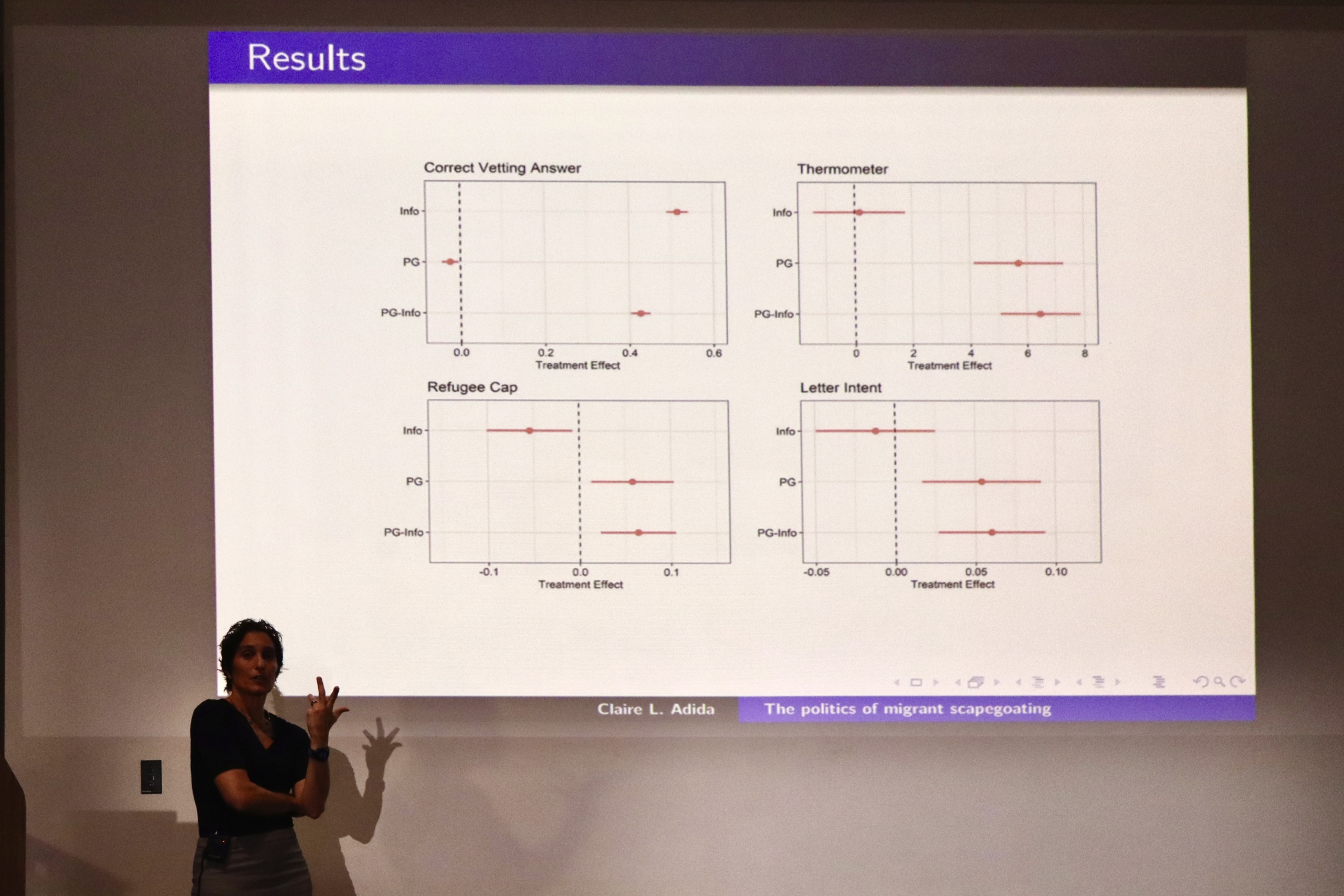
Adida presents the results of her empathy intervention. Photo by Hannah Park.
In summary of her results, Adida concluded that information alone updated people’s understanding of the length of the refugee vetting process, but did little to change their attitudes. On the other hand, the narrative improved the participants’ warmth toward refugees, their attitude towards refugee caps, and their intentions to write letters concerning these caps. But what happens when the researchers combine the two?
“You have movement on all four outcomes toward inclusion,” Adida said. “You do not see what we thought might happen, that they enhance each other … But together, [information and narratives] might [even] guard against a backfire effect.”
“Our research shows that humanizing narratives can be just as powerful as scapegoating narratives.” – Claire Adida
Motomura and Valenzuela: Remarks
Following Adida’s presentation, Motomura, a professor at the UCLA School of Law and faculty co-director at the Center for Immigration Law and Policy at UCLA, added a legal dimension to the discussion of migrant inclusion and exclusion—placing it in local, regional, and national contexts. He highlighted immigration law and its often discretionary enforcement.
Before this, however, Motomura had much to say about “kindness to the stranger.” He invited the audience to see this stranger from a child’s perspective.
“The first question my granddaughter might ask me is, ‘Where does the stranger live? Is this a new kid on the block … or is it someone far, far away that I have to take a plane to see? Is it just someone I see on television?’”
To Motomura, it matters whether one perceives the stranger as “next door” or not. Along the same lines, it matters whether the locus of decision making in immigration policy is state, local, or federal.
“One of the concerns I have is that the federal sphere is so polarized in a partisan way,” Motomura said. “And yet there are signs that at a local level, there’s … [more] common cause and reaching across the aisle.”
While immigration law is traditionally federal, states and localities have involved themselves throughout American history by either assisting federal enforcement (such as involving state and local police and information sharing) or neutralizing federal enforcement (such as providing sanctuary or fostering inclusion by offering in-state tuition and drivers’ licenses to individuals regardless of immigration status).
“Enforcement is highly discretionary. We have a huge mismatch between the law on the books and the law in action,” Motomura said. “[When] the police can decide whom to arrest and whom to detain and whom to put in deportation machinery … there’s a high risk of undetected and unremediated discrimination.”
Because of the potential for discriminatory enforcement and variation in state and local involvement, immigration policy is far from clear-cut or objective. “The rule of law” can and has resulted in violence to the stranger.
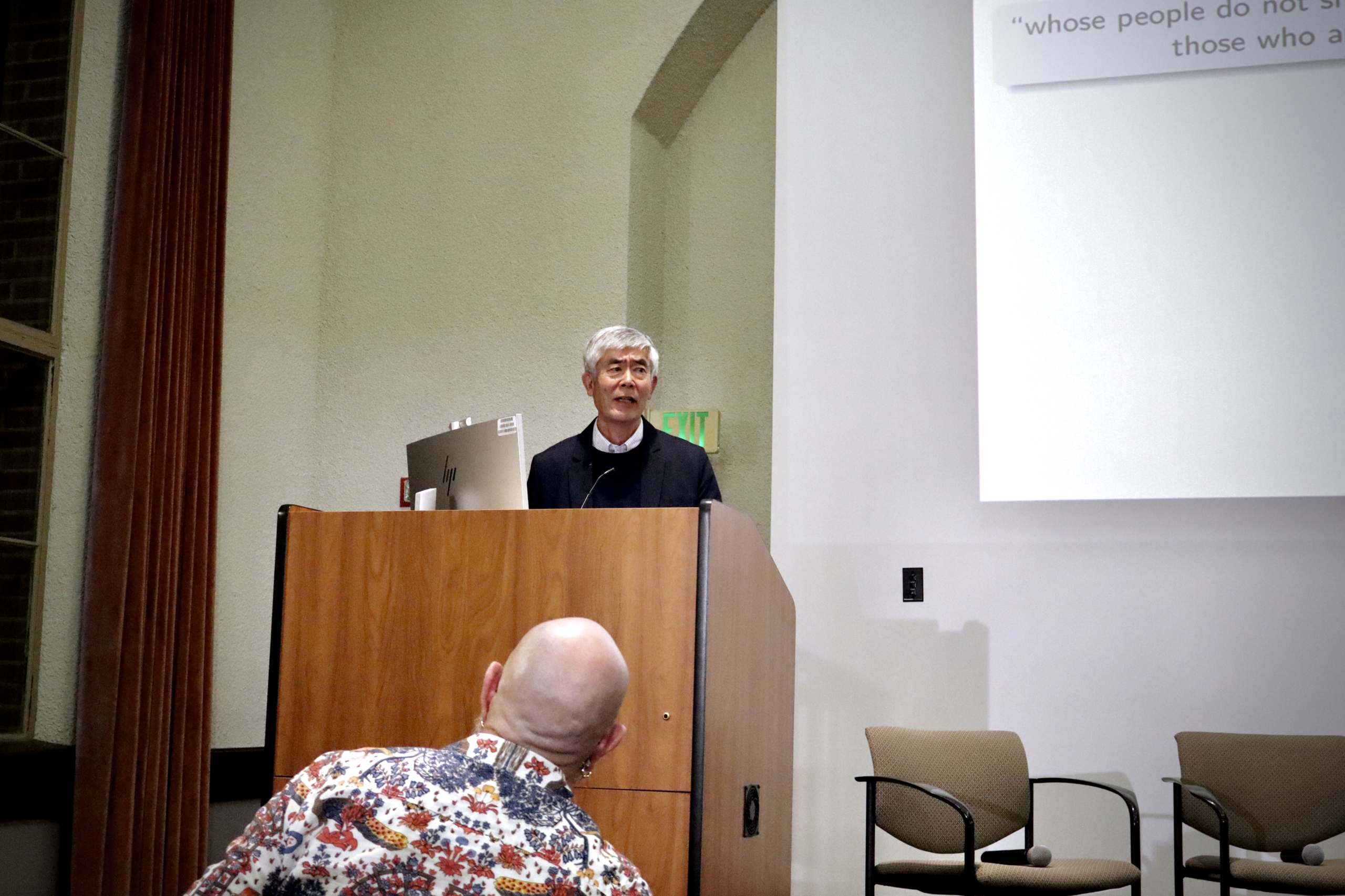
Motomura shares his observations on immigration law and enforcement. Photo by Hannah Park.
Following Motomura, Valenzuela, dean of the UCLA Division of Social Sciences and a professor of Urban Planning and Chicana/o Studies, shared his humanizing research on day laborers he conducted around two decades ago.
At its core, Valenzuela’s research invites people to reimagine day laborers—primarily men who look for work on street corners or stores like Home Depot—as neighbors rather than strangers. In decades prior, undocumented immigrants would look for work in this ubiquitous, visible way, from Los Angeles to New York, and many points in between. He credited the Coalition for Human and Immigrant Rights in Los Angeles, who helped him gain access to this important community.
As part of his surveys on the lives of day laborers, Valenzuela asked humanizing questions such as the size of laborers’ families and activities they participated in outside of work, such as going to church and school and engaging in neighborhood soccer tournaments. When putting together his report, he vetted his findings with the day laborers themselves. Rather than beginning with socioeconomic questions, however, they encouraged him to share laborers’ family values and aspirations (such as to become entrepreneurs).
“[The laborers] pushed me to lead that report with that narrative—the narrative that would allow for greater empathy,” Valenzuela said. “A narrative that would allow different perspectives on these men.”
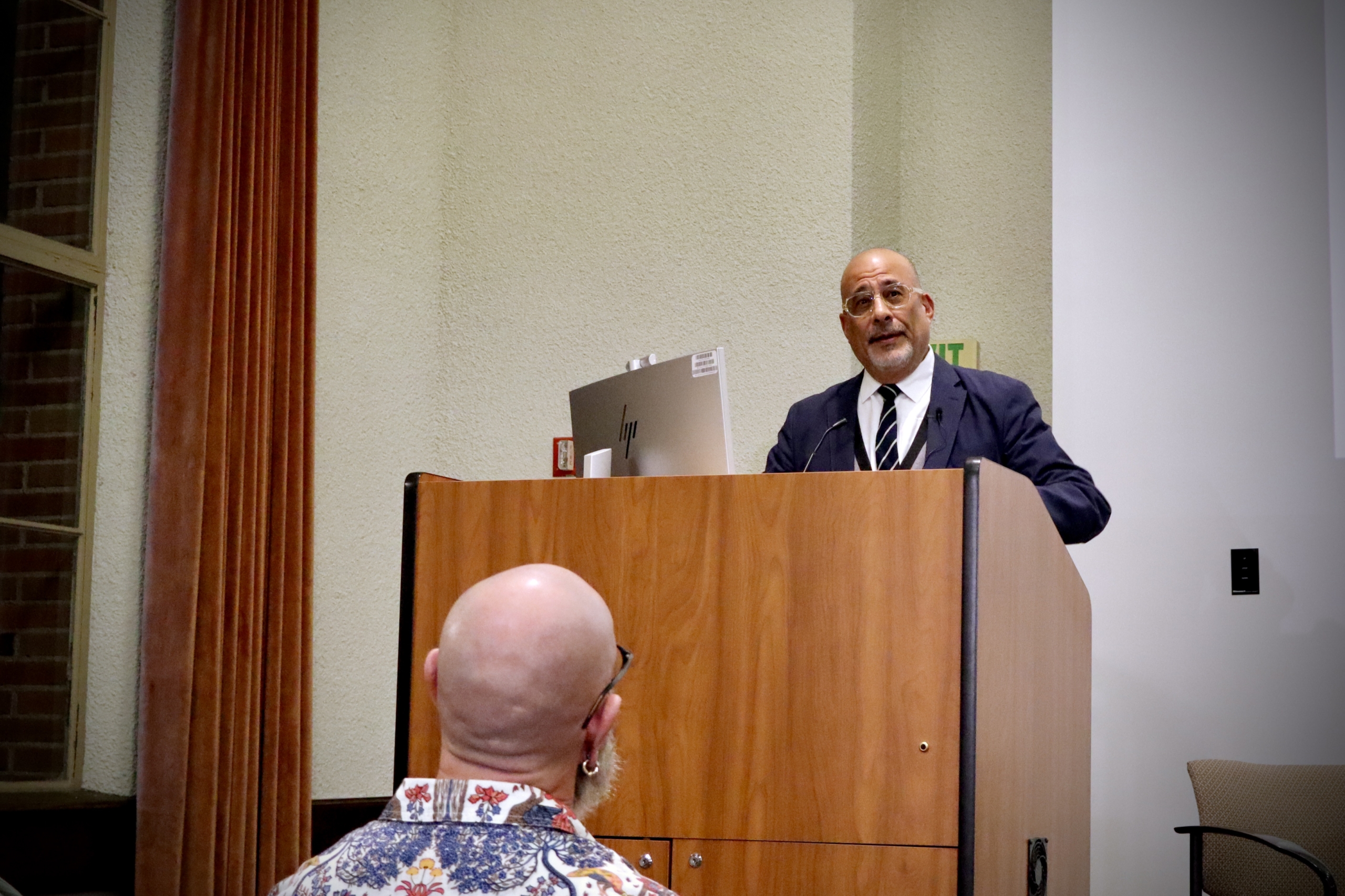
Valenzuela shares about his own push to humanize undocumented day laborers. Photo by Hannah Park.
Panel Discussion
After their individual remarks, Adida, Motomura and Valenzuela engaged in a panel discussion with Myers. The panelists touched upon key themes such as the need for immigration reform, real-world policy applications of Adida’s research, and the power of labels through the connotations and narratives they awaken. Motomura reminded the audience that the U.S. has relied on presidential executive orders to conduct immigration policy since the early 2000s due to a lack of comprehensive reform, which places already vulnerable groups in greater precarity when such orders (such as temporary protected status) are revoked.
Adida was then asked the “million dollar question”: how could they translate her research into policy? The Stanford professor responded with her plans to use social media to present narratives on a larger scale. The panelists went on to discuss current narratives of empathy and exclusion circulating on social media platforms centered around the crisis in Minneapolis (Operation Metro Surge and its fallout). They recalled seeing stories of kindness to the stranger clashing with federal efforts ramping up hostility to the stranger—the latter treating immigrants, in Myers’ words, as “political fodder in a very brutal game.”
Finally, the panelists explored the impact of labeling immigrants (such as how people tend to feel less warmth toward “asylum seekers” as opposed to “immigrants” and “refugees,” according to Adida) and how forces of exclusion dehumanize immigrants using terms such as “criminal illegals” and “invasion.”
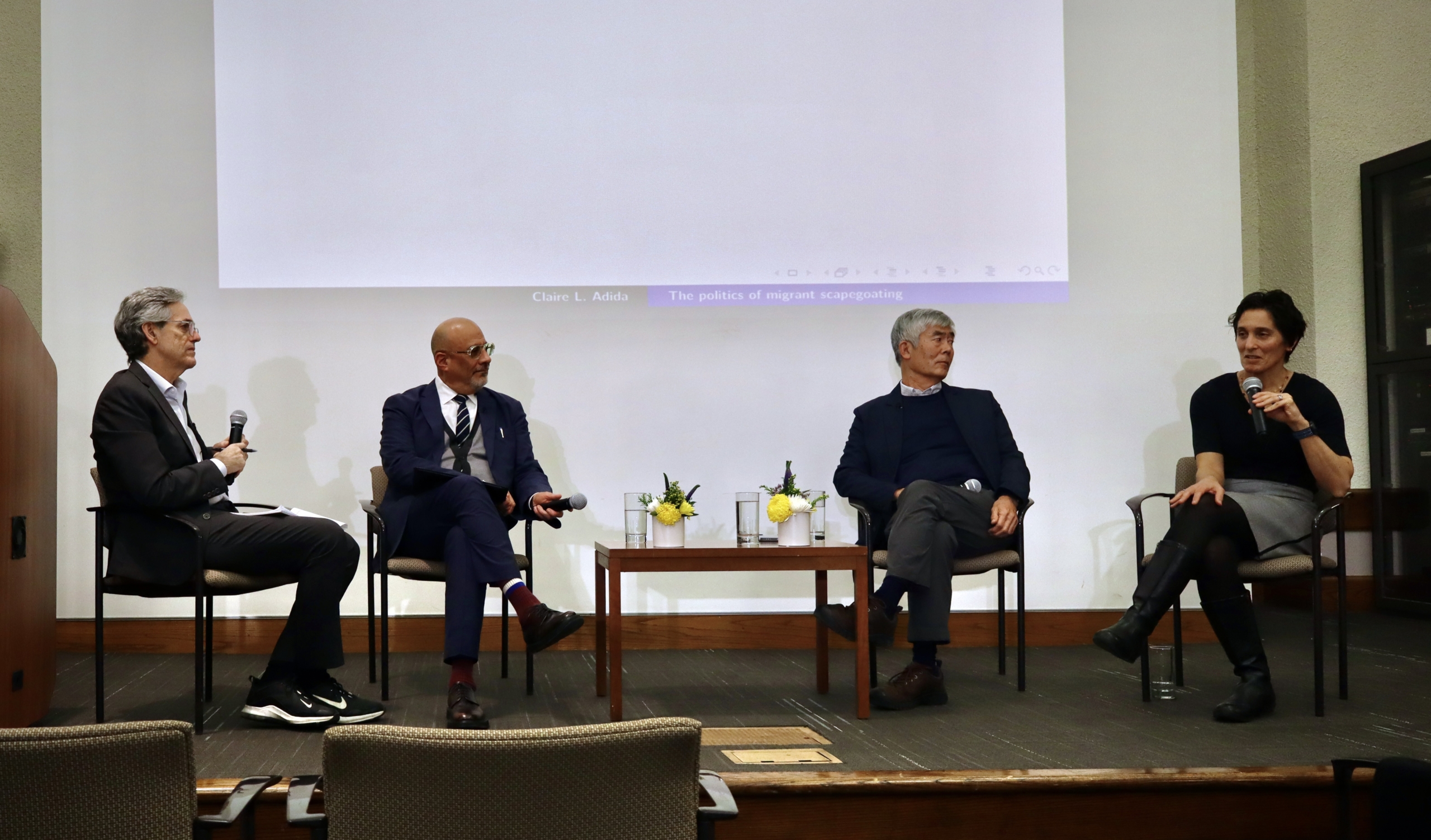
Panel (from left to right): David Myers, Abel Valenzuela Jr., Hiroshi Motomura and Claire Adida. Photo by Hannah Park.
Q&A
Following this discussion, members of the audience posed a few questions to the panel.
What do you mean by empathy? I teach that here at UCLA. People often have all kinds of misconceptions about it.
Adida: “[For me, empathy is] the ability to put yourself in the other person’s shoes. There’s different types of empathy. There’s more cognitive empathy … imagining without really sharing emotion … And then there’s more hot empathy, where there’s more sharing of emotions. But there’s even more types of empathy than that.”
Many demographics, especially Asian Americans, are often perceived as perpetual foreigners (evinced by questions like, “No, where are you really from?”). How long does it take for an immigrant group to be seen as American, especially if they are perceived as a racial “other”?
Motomura: “I don’t know how long it takes. I do know that it matters where you are in the country. When I moved to Los Angeles—I moved [here] from North Carolina—I went to a Starbucks, ordered a latte. They asked me, ‘What’s your name?’ And I said, ‘Hiroshi,’ and I started spelling it. She looked at me and said, ‘What are you spelling that for?’ … [Also,] the law plays a role in saying who’s really American, and I think that dovetails with some of the perpetual foreigner phenomena that we see.”
Adida: “It also depends on who you ask. If you look at the cues that Border Patrol and ICE officials are using to discriminate, they’re paying attention to accents and to skin color. And so all of a sudden, you have folks who probably thought they were assimilated Americans who have now been deemed to be foreigners … I think there are groups of people for whom … if you’re not a kind of white Christian, then you are not American. And unfortunately, those are the folks who are making policy right now.”
There’s a lot of research that shows that poetry increases empathy. If you could pass the baton to someone to get non-empathetic people to immerse themselves in these narratives you described, who would you hand the baton to? What would “Part Two” of your research look like?
Adida: “There is research that looks at the role of the arts and entertainment in generating empathy … There was a study in Canada with elementary school kids that had them take the position of a newborn … and somehow this exercise incredibly increased their empathy … I do think that we all kind of have a different baseline capacity to empathize, but I also think you can work on it … [especially] when you’re young. I think introducing an empathy curriculum in schools … might be phase two of the research.”
Motomura: “I’m going to focus on a different dimension of your question, which is really the medium in which we say things … We can do all the academic writing we want, but it may be the TV show that really matters … I was asked a few years ago to give a talk on citizenship on campus … and instead of giving a talk, I took my guitar and played different verses of ‘This Land is Your Land.’”
What is your favorite way to express kindness to a stranger?
Adida: “Inviting them for a homecooked meal. It’s one of the ways in which I invite a newcomer to my home.”
Motomura: “Kindness is listening deeply and concentrating on what they’re saying, and not seeing it through how it relates to what you were doing.”
Valenzuela: “I’ll greet people that I may not know, and I’ll try to be as authentic as possible, and ask them how they’re doing and feeling … Really try to listen, look at them in the eye.”
Myers: “Opening up our home to … those who are near, those who are far, without discrimination. [Also, I’ll ask] the question, ‘Could you please tell me what you mean?’ My tendency is usually to attribute the worst possible meaning … It really relates to what Hiroshi said about not just listening, but hearing.”
About the Speakers
Claire Adida is a senior fellow at the Freeman Spogli Institute for International Studies and faculty co-director at the Immigration Policy Lab at Stanford University, whose research on immigration and kindness investigates how countries manage new and existing forms of diversity, what exacerbates or alleviates outgroup prejudice and discrimination, and how vulnerable groups navigate discriminatory environments.
Hiroshi Motomura is the Susan Westerberg Prager Professor of Law at the UCLA School of Law and faculty co-director at the Center for Immigration Law and Policy at UCLA. Motomura is a teacher and leading scholar of immigration and citizenship, with influence across a range of academic disciplines and in federal, state, and local policymaking.
Abel Valenzuela Jr. is the dean of the UCLA Division of Social Sciences and a professor of Urban Planning and Chicana/o Studies. Professor Valenzuela is one of the leading national experts on day labor and has published numerous articles and technical reports on the subject. His research interests include precarious labor markets, worker centers, immigrant workers, and Los Angeles. In addition to the topic of day labor, he has published numerous articles on immigrant settlement, labor market outcomes, urban poverty and inequality.
