External Dialogue Resources
Toolkits and Guides

Toolkits and Guides
The following are bridging-related toolkits and resource guides from various nonprofit and educational organizations. They offer practical tools, frameworks, and learning materials that support respectful conversation, active listening, and constructive engagement in different contexts.
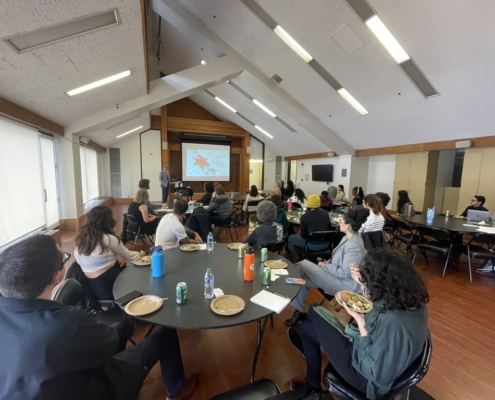

Resources that provide practical guidance, activities, and facilitation strategies for leading conversations and group dialogue.
Activity Guide: Structures for Dialogue
Organization: Constructive Dialogue Institute
What it is: A resource list that describes creative approaches that invite student sharing.
Who it’s for: Faculty, instructors, and other leaders who organize student-facing activities, courses, and dialogues.
Link: https://constructivedialogue.org/assets/Activity-Guide_-Structures-for-Dialogue.pdf
Activity Guide: Listening Sessions
Organization: Constructive Dialogue Institute
What it is: An activity guide for listening sessions where students share from a prompt with a partner, the other listens without interruption, then asks constructive questions to learn more.
Who it’s for: Faculty, instructors, and facilitators leading student discussions or dialogue activities.
Link:
https://constructivedialogue.org/assets/Activity-Guide_-Listening-Sessions.pdf
People, Politics & Reweaving the Social Fabric: A Supper, Story-Sharing & Listening Guidebook
Organization: The People’s Supper
What it is: A guidebook that “includes everything you need to know to host a supper of your own, designed for deep listening and meaningful sharing of our stories,” with discussion questions, ground rules, and facilitation tools.
Who it’s for: Students and facilitators hosting small-group conversations and dialogue gatherings.
Link: https://drive.google.com/drive/folders/15btWIjDmx6ZEvWnPa4cwmsocNRuS36mj
Resources that include activities, discussion formats, and strategies for facilitating conversations across differences in group settings.
Bridging Differences Playbook
Organization: Greater Good Science Center, UC Berkeley
What it is: A playbook that shares research-based skills and strategies for bridging differences, organized into intrapersonal, interpersonal, and intergroup practices.
Who it’s for: Anyone interested in building understanding, having better conversations, and bridging differences across communities.
Link:
https://greatergood.berkeley.edu/images/uploads/Bridging_Differences_Playbook-Final.pdf
Bridging Differences Playbooks and Course Materials
Organization: Greater Good Science Center, UC Berkeley
What it is: A collection of playbooks and course materials that bring together multiple bridging practices, tools, and examples for applying these approaches across different campus settings.
Who it’s for: Students, educators, and campus communities interested in learning and practicing bridging differences.
Link:
https://ggsc.berkeley.edu/who_we_serve/bridge_builders/playbooks_and_course
Skills for Bridging the Divide
Organization: Braver Angels
What it is: A skills guide that includes listening skills, speaking skills, tone-setting strategies, and practice exercises for conversations with people from a different political viewpoint.
Who it’s for: Students and individuals looking to improve how they engage in conversations across political differences.
Navigating Social Issues in the Classroom: A Toolkit for Educators as Community Bridge-Builders
Organization: Harvard Graduate School of Education – Making Caring Common
What it is: A dialogue toolkit that uses a three-phase framework (prepare, build, engage) to guide educators in facilitating conversations about social issues. Includes strategies, lesson plans, and guidance for leading discussions across differences.
Who it’s for: Educators and administrators facilitating classroom or campus conversations on social issues.
Link:
https://mcc.gse.harvard.edu/resources-for-educators/ecbb-toolkit
Fostering Pluralism in Higher Education: A Playbook for Senior Leaders
Organization: Interfaith America
What it is: A playbook intended as a practical guide for senior campus leaders seeking to foster a culture of pluralism on their campuses, outlining pluralism practices including institutional leadership, capacity building, curriculum and scholarship, and co-curricular engagement.
Who it’s for: Senior leaders, administrators, and campus professionals working to foster pluralism in higher education.
Link:
Resources designed to support dialogue on specific topics such as race, politics, or civic engagement.
Free Speech & Inclusion Discussion Guide
Organization: Institute for Democracy & Higher Education (IDHE)
What it is: A guide for discussion leaders that outlines a structured conversation on free speech and inclusion, including introductions, framing the issue, exploring viewpoints, and identifying actions.
Who it’s for: Faculty, staff, and campus facilitators leading group discussions on free expression, inclusion, and campus climate.
Link:
Race in America: A Free Dialogue Guide
Organization: Essential Partners
What it is: A facilitation and dialogue guide that utilizes the Essential Partners approach to host a dialogue about race and race relations in the United States. Includes a facilitator script, step-by-step instructions, and tips and tricks.
Who it’s for: Anyone who wants to participate in or facilitate a dialogue about race
Link:
https://whatisessential.org/resources/race-america-free-dialogue-guide
Israel and Palestine Teaching Toolkit
Organization: National Council for the Social Studies
What it is: A toolkit that provides “tools and resources necessary to navigate the complex and sensitive topic of the Israel–Hamas War while promoting critical thinking, empathy, and informed civic engagement among students.”
Who it’s for: Educators teaching about the Israel–Palestine conflict and other potentially divisive topics.
Link:
https://www.socialstudies.org/resources/israel-and-palestine-teaching-toolkit
Disagree Better: How-To Guide
Organization: Disagree Better
What it is: A How-To Guide that outlines ways to “Disagree Better by How You Think,” “How You Listen,” and “How You Speak,” including practices like “listen to understand, not just reply” and use ‘I’ statements, not ‘you’ statements.
Who it’s for: Students and individuals looking to improve how they engage in disagreement and conversation across differences.
Link:
Kindness Conversation Guide
Organization: Living Room Conversations
What it is: A conversation guide where “four to six people meet… to listen to and be heard by others,” using structured question rounds, conversation agreements, and prompts to explore experiences of kindness.
Who it’s for: Students and small groups looking to host or participate in conversations about kindness and community.
Link:
Shared Values Facilitation Guide
Organization: Interfaith America
What it is: A facilitation guide designed to “help you lead interfaith conversation around shared values,” including texts, storytelling prompts, and discussion activities focused on values such as service, conservation, hospitality, and forgiveness.
Who it’s for: Students, facilitators, and campus groups leading or participating in interfaith dialogue.
Link:
https://www.interfaithamerica.org/resources/shared-values-facilitation-guide/
Leading a Divided Campus: Ideas and Illustrations
Organization: Divided Community Project, The Ohio State University Moritz College of Law
What it is: A guide that outlines strategies for responding to campus division, including assessment, communication, and programming approaches that support students in engaging across differences, addressing conflict, and building community resiliency.
Who it’s for: Students, campus leaders, and community members responding to conflict, protest, and division on college campuses.
Link:
https://kb.osu.edu/server/api/core/bitstreams/1288930b-46aa-431f-888c-32ee38f2ab2b/content

Dialogue Across Difference Initiative
1500 Public Affairs Building
337 Charles E Young Dr E
Los Angeles, CA 90095